
How to Prepare for Movers: Be Ready Before the Crew Arrives
Local moves are billed by the hour — 2 movers at $149/hr, 3 at $199/hr, 4 at $249/hr — which means preparation is not a courtesy to the crew. It is money in your pocket. Every task below removes minutes from a clock you are paying for, and together they routinely take an hour or more off a move. Here is exactly what "ready" looks like before the truck pulls up, for moves across NYC and Long Island. For the bigger planning picture, start with our moving planning guide; this page is the final-week checklist.
The ready-before-the-crew checklist
Boxes sealed and labeled
Every box closed, taped, and labeled with its destination room. A box the crew has to finish is a box on your clock.
Paths and hallways clear
A straight line from every room to the door — shoes, rugs, toys and clutter out of the carry path, doors propped or removed where needed.
Appliances emptied and disconnected
Fridge and freezer emptied and defrosted, washer and dryer disconnected, water lines off — before the crew arrives, not while they wait.
Elevator reserved, parking sorted
Elevator booked with the building, move window confirmed, and a legal spot for the truck thought through at both addresses.
Kids and pets arranged
Little ones and animals with family, a sitter, or in one closed room — for their safety and the crew's speed.
Essentials bag packed
Documents, medications, chargers, keys, toiletries, a change of clothes and the coffee supplies — in your car, not in a box.
Boxes: sealed, labeled, and actually finished
"Mostly packed" is where moving budgets go to die. The crew arrives, and half the kitchen is still in cabinets, boxes are open with things balanced on top, and the first hour of your 4-hour minimum is spent finishing a job that was supposed to be done. Seal every box and tape it shut. Label it with the room it belongs to at the new home — "Kitchen," "Primary Bath," "Kids' Room" — because labeled boxes go straight to the right room on unload instead of stacking up in a hallway for you to sort later. Keep boxes a carryable weight: books in small boxes, linens in big ones. And empty every drawer, nightstand and cabinet. Furniture travels empty; that is what keeps it — and your belongings — intact.
If packing is the part you are dreading, it is also the part you can hand off: crews pack on the same hourly clock as the move, with materials packages from $150 for a studio up to $750 for a 4+ bedroom home, or $75–$125 for a partial pack like just the kitchen. Plenty of customers pack the easy rooms and leave the kitchen — the most breakable room in the house — to the crew. Our complete moving checklist lays out the week-by-week version of all of this.
Clear the paths, empty the appliances
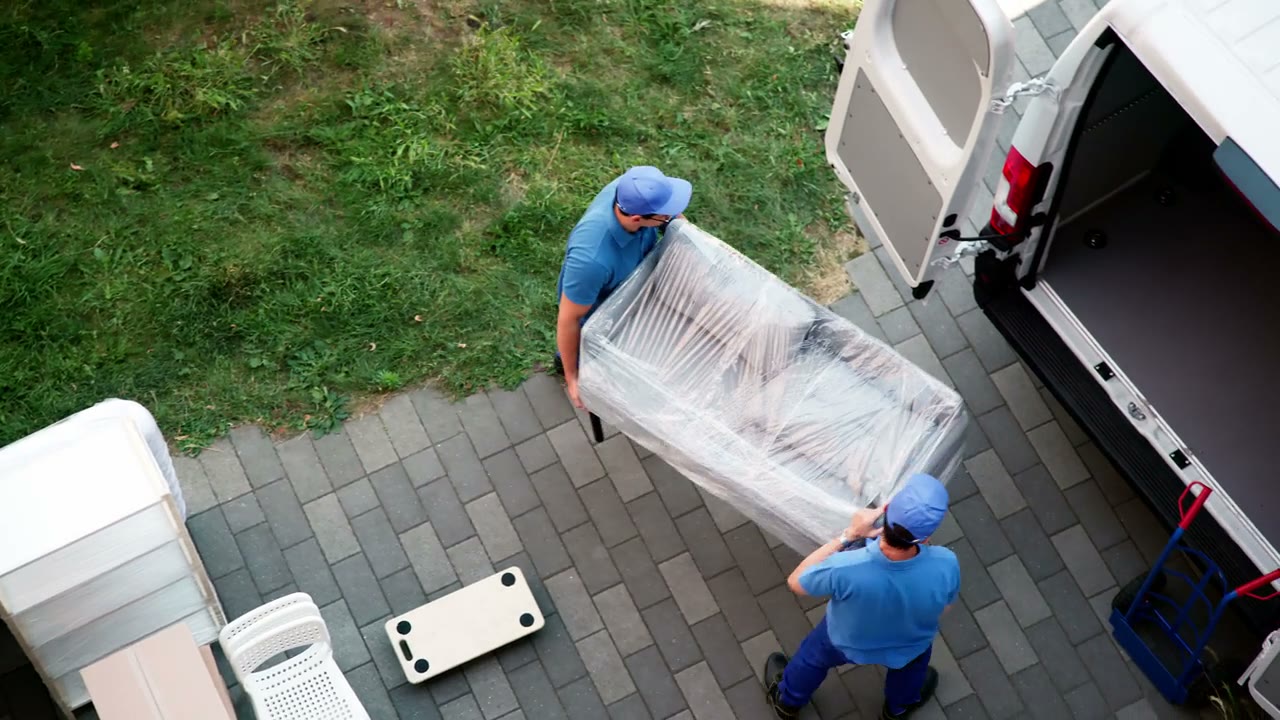
Walk the route the furniture will travel — bedroom to hallway to door to truck — and clear it like you mean it. Shoes by the door, the rug that slides, the bike in the hallway, the car in the driveway where the truck needs to be. Two movers carrying a couch cannot step over obstacles, and every detour is time. Take down anything hanging in narrow halls, and decide in advance which doors come off their hinges if a big piece needs the clearance.
Appliances deserve their own day-before attention. The fridge and freezer should be emptied, defrosted, and dried out — a freezer still shedding ice cannot go on a truck full of furniture. Washers get drained and disconnected, dryers unplugged and unvented. If a gas line or a hard-plumbed connection is involved and you are not confident, bring in a plumber or handyman the day before; reconnecting utilities is their trade. What the crew should find at 9 AM is appliances at the door, ready to be wrapped and carried — not a disconnect project waiting for them.
Buildings, elevators, and parking
In New York, the building is half the move. If either address has an elevator, reserve it — this week, not the morning of — and confirm your building's move window, since many co-ops and condos restrict moves to certain hours and days. Ask management what they need from the mover; many buildings require a certificate of insurance, which we provide as part of booking when you tell us it is required. Then think about the truck: where does it legally park at both addresses, how far is the carry, and does a neighbor's car or a street-cleaning window complicate it? Flag anything unusual — a steep driveway, a fifth-floor walk-up, a long carry from the parking area — when you book your local move, and the quote and the crew plan will already account for it.
People, pets, and the essentials bag
Arrange the small humans and animals before the door starts swinging. Kids do best with family or a sitter for the heavy hours, and pets belong in one closed, labeled room — or off-site entirely. A dog underfoot during a couch carry is a safety problem, not a cute moment. Then pack the bag that never goes on the truck: IDs and closing or lease documents, medications, phone chargers, keys to both homes, basic toiletries, a change of clothes, snacks, and whatever you need for the first night — sheets, towels, the coffee maker if mornings matter. Unpacking takes days; the essentials bag is what makes day one livable. Finally, do a last walkthrough before the truck door closes: closets, attic, basement, garage, behind doors. The cheapest item to move is the one that is on the truck the first time.
Do this prep and the crew's day gets simple: wrap the furniture — which they do on every piece, as standard — load in clean runs, drive, unload into labeled rooms, place the furniture, done. That is how a move quoted honestly at 6 hours finishes at 6 hours. Skip the prep, and the same move takes 8, at the same rate, with the same crew working just as hard. Preparation is the discount you give yourself.
Frequently asked questions
What does the crew wrap — and what should I wrap myself?
The crew pads and wraps every piece of furniture as standard on every move — sofas, tables, dressers, mattresses, all of it, protected before it is carried. That is included in the hourly rate, not an extra. What you should handle yourself is what goes in boxes: dishes, books, clothes, the contents of drawers and cabinets. If you would rather not pack at all, the crew can do it on the same hourly clock, with materials packages at $150 for a studio, $225 for 1 bedroom, $350 for 2 bedrooms, $550 for 3 bedrooms and $750 for 4+ bedrooms — but if you do pack, sealed and labeled boxes are what save you money.
Should I empty dresser drawers before the move?
Yes — empty them. Drawers left full make furniture heavy and awkward, contents shift and get damaged, and some pieces cannot be carried safely loaded. Clothes and linens from drawers pack fine in boxes or bags you provide. The exception people hope for — "the movers can just take it as is" — usually ends with the crew emptying the drawers into boxes on your clock anyway. Ten minutes the night before beats twenty minutes at the moving rate: $149/hr for 2 movers, $199/hr for 3, $249/hr for 4.
Do I need to disconnect my appliances?
Have them emptied and disconnected before the crew arrives: fridge and freezer defrosted and dry, washer drained with hoses off, dryer unplugged and vent detached. If disconnecting involves gas lines or hardwired plumbing you are not comfortable touching, arrange a plumber or handyman for the day before — that is their trade, not the moving crew's. An appliance that is ready at the door takes minutes to move; one that is still hooked up, full, or frozen shut stops the whole job cold while the clock runs.
How does being prepared actually lower my bill?
Local moves are billed on actual time, with a 4-hour minimum and full-hour increments after it. The clock runs from arrival through wrapping, loading, the drive, unloading and placement. Every minute the crew spends waiting on an elevator nobody reserved, finishing boxes, or working around hallway clutter is a paid minute — and minutes decide whether you land inside one hour or spill into the next. A prepared home is the difference between a 5-hour move and a 7-hour move at the same rate. A 25% deposit of the expected total holds your date, the balance is based on the hours actually worked plus the 5% admin fee, and preparation is the one lever fully in your hands.
What if I run out of time and I am not fully packed?
It happens — call us before moving day rather than apologizing at the door. The crew can finish the packing on the same hourly clock, and we can add materials on the spot from the standard packages: $75–$125 for a partial pack like the kitchen, up to the full-home packages by size. What matters is that we know, so the right supplies and enough crew are on the truck. The one thing not to do is leave loose, unpacked items everywhere — loose items are the slowest and most damage-prone way to fill a truck.
Get your exact price in about a minute
Pick your crew and home size and see the expected total before you book. Movers & Cleanout Crew — Home Services & Commercial Coordination. WE MOVE. WE HAUL. WE CLEAN. WE COORDINATE IT ALL.
Open 24 hours, 7 days. Serving Nassau County, Suffolk County, and NYC.